

Tesla Is Moving Away From Solar Roof - And I Understand Why
The recent news that Tesla appears to be moving away from its Solar Roof and back toward traditional solar panels caught my attention, particularly because I had an opportunity to see the Solar Roof program up close during its early days in Central Texas.
My experience with Tesla began around 2019 while I was Director of Operations at Wells Solar. We partnered with Tesla to install Tesla EV charging equipment throughout Central Texas. Around that same time, I helped lead a separate Tesla division within Wells Solar and Electrical Services as we became one of the first non-Tesla contractors in Central Texas certified to install the Tesla Solar Roof.
The technology was impressive. The concept was even more interesting: instead of installing a roof and then installing solar panels on top of it, why not make the roof itself produce electricity? In practice, however, we quickly saw some of the challenges.

Great concept. Complicated construction project.
Cost was one of the first obstacles. We were asked to prepare reroofing bids based on Tesla's specific construction criteria. We quickly found that customers who could afford a Tesla Solar Roof also tended to own larger, more complex homes. Those homes generally had greater electricity demands, requiring larger solar systems and making an already expensive product considerably more expensive.
One of our first project estimates approached $275,000 for a Solar Roof installation on a 6,200-square-foot home in Central Austin.
There were logistical challenges with the installations as well. The process required materials to arrive and be installed in a very specific sequence, but deliveries didn't always arrive in that sequence. At times, we received materials long before we could actually use them, requiring additional storage and creating challenges with scheduling, inventory and billing.
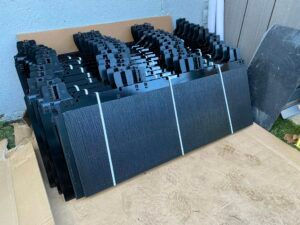
Ultimately, a Solar Roof also combines two very different construction systems.
A roof has one primary responsibility: protect the building from the elements for decades.
A solar system has another: safely generate electricity while allowing components to be monitored, serviced, repaired and eventually replaced.
Combining the two sounds elegant. But it also means that servicing one system can potentially affect the other.
Sometimes simpler really is better
That's why Tesla's apparent decision to return its residential solar focus toward conventional solar panels makes sense to me.
Traditional solar doesn't mean roofing and solar should operate independently. Quite the opposite. The best projects I've been involved with happen when the roofer and solar contractor coordinate closely, while each remains responsible for the work they specialize in.
If a roof eventually needs replacement or repair, the solar array can be detached, the roofer can install or repair the roofing system, and the solar contractor can then reinstall and recommission the solar system.
Likewise, if a panel, inverter or other solar component fails, it can generally be serviced or replaced without having to replace part of the roof itself.
After years of working on both sides of these projects, I've come to appreciate a fairly simple philosophy:
Let the roof be a roof and perform as it was designed, without compromising its construction to accommodate the solar system. Let the solar system be a solar system, producing electricity without being limited by the construction requirements of the roof. And have good professionals who understand their respective trades work together to design, build and service the two systems.
For homeowners, roofers and solar professionals, Tesla's change in direction may be another reminder that sometimes the most successful technology isn't the most complicated solution. Sometimes it's the one that's easier to install, maintain, repair and service over the long term.
The news discussed here was reported by Canary Media on August 24, 2026. [Read the original Canary Media article
.]
Comments